Gas vs Kerosene vs Charcoal: Which Is Cheaper to Cook With?
For many Nigerian homes, the kitchen fuel question is really a money question. Gas, kerosene, or charcoal, which one actually costs less to cook with? It is a fair thing to ask. But the honest answer goes well beyond the price you pay when you buy it.
This is a gas vs kerosene vs charcoal comparison built around real cost, not just the sticker. We will look at what each fuel truly costs to use, day after day. Then you can decide what fits your kitchen best.
It is not just the price you pay
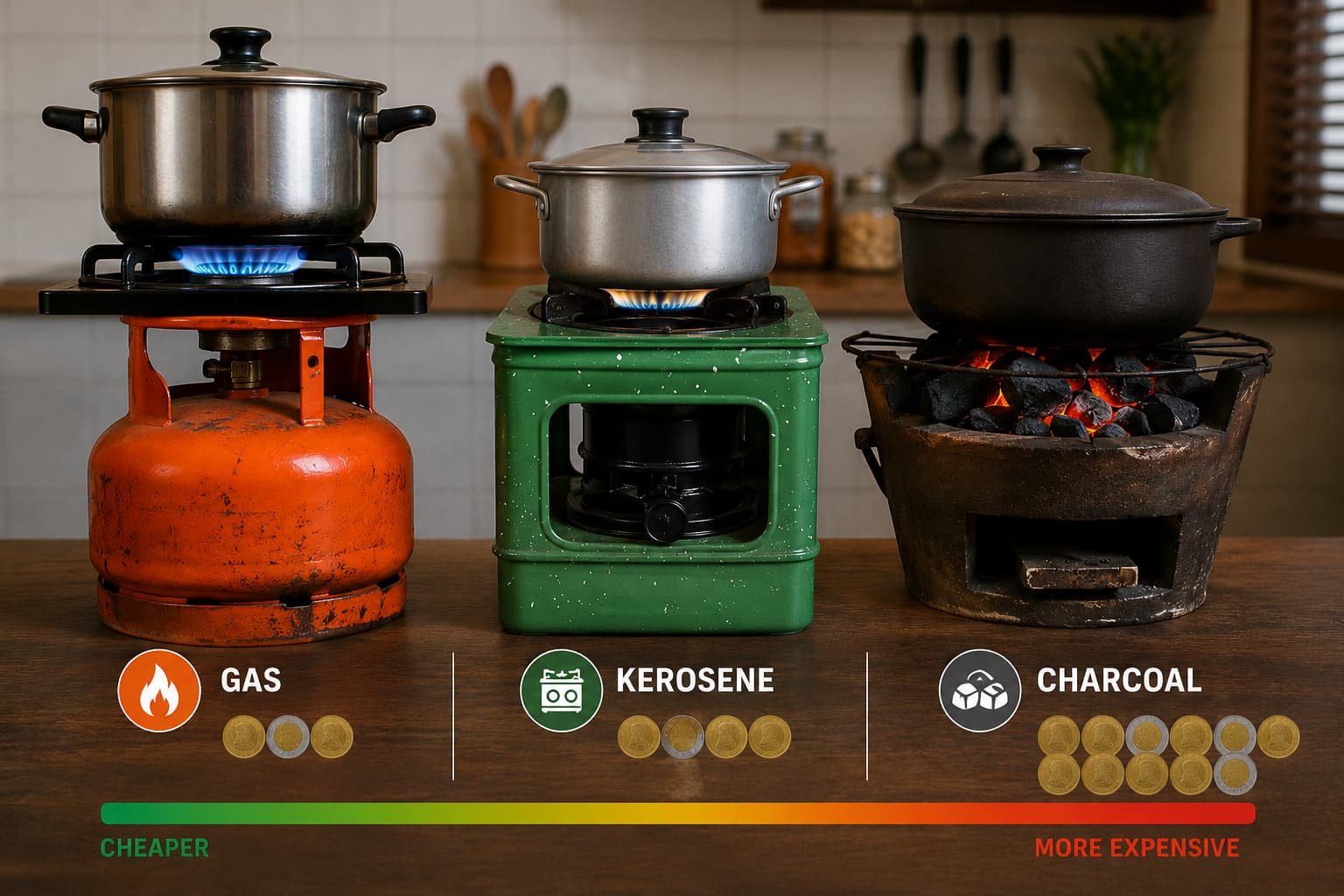
Here is the idea that changes everything. The cheapest fuel to buy is not always the cheapest to cook with. The real cost includes how efficiently a fuel heats your pot, how much is wasted, and how long it takes. Add the cleaning, the smoke, and the health side, and the picture shifts. A fuel that looks cheap can quietly cost you more.
Charcoal: cheap to buy, costly to use
Charcoal has the lowest entry price, and that is its main appeal. You can buy a little at a time, with no setup at all. But it is slow to light and slow to cook. Much of its heat drifts away into the open air. It blackens your pots, fills the kitchen with smoke, and the smoke is not kind to your lungs. For everyday cooking, charcoal is rarely as cheap as it first seems.
Kerosene: convenient but unpredictable
Kerosene sits in the middle, and many homes know it well. It lights faster than charcoal and needs only a simple stove. The catch is its price, which can swing sharply and without warning. It also leaves soot on your pots, carries a strong smell, and gives off fumes as it burns. When supply is tight, the cost can climb fast. It is convenient, but rarely steady.
Gas: higher setup, lower running cost
Gas asks for a little more at the start. You buy a cylinder, a regulator, a hose, and a burner once. After that, you simply pay to refill the gas. And gas is efficient. Its heat goes straight into the pot, with very little waste. It is clean, fast, and easy to control. For a home that cooks regularly, that efficiency usually makes it the cheapest to run. Our buying guide breaks the running cost down further.
Why gas usually wins on cost
It comes down to efficiency. With gas, you get instant heat that you can turn up or down at once. Little of it is wasted, so more of what you pay for actually cooks your food. Meals are ready faster, which saves fuel and time. Your pots stay clean, so you scrub less. And there is no smoke filling your kitchen. Across a month of daily cooking, those savings add up in gas’s favour.
When another fuel might make sense
To be fair, gas is not the only answer for everyone. If you cook only now and then, the upfront setup may not be worth it yet. If you cannot cover the setup cost today, charcoal or kerosene can bridge the gap. And charcoal still has its place for the occasional barbecue or smoky flavour. The right choice depends on how often, and how much, you actually cook.
How to judge it for your own home
Make the decision on a per-meal basis, not per purchase. Ask how much fuel each meal really uses, and how much is wasted. Factor in your time, your cleaning, and the air you breathe. For a household that cooks every day, gas almost always comes out ahead. If you are weighing the switch, our getting started guide walks you through it.
Frequently asked questions
Is gas cheaper than kerosene?
For regular cooking, usually yes. Gas burns more efficiently and wastes less heat, so the cost per meal tends to be lower, even if a refill costs more in one go.
Is charcoal cheaper than gas?
Only to buy, not to use. Charcoal wastes a lot of heat and cooks slowly, so for daily meals gas usually works out cheaper overall.
Which cooking fuel is the cleanest?
Gas, by a clear margin. It burns clean, keeps your pots tidy, and produces no smoke, unlike charcoal or kerosene.
Is gas worth the setup cost?
For most homes that cook daily, yes. The setup is a one-time cost, and the lower running cost soon makes up for it.
So, in the gas vs kerosene vs charcoal question, the cheapest fuel is not the one with the lowest price tag. It is the one that cooks your food with the least waste. For most daily kitchens in Nigeria, that is gas. It costs a little more to set up, then quietly saves you money meal after meal.
If you are in Lagos and ready to switch, we can help you get started. Read our buying guide for more on value, see our services, or message us on WhatsApp.