Why Does Cooking Gas Price Change So Often in Nigeria?
Have you ever refilled your cylinder, only to find that the price has changed again a few weeks later? You are not imagining it. Cooking gas prices in Nigeria can move up or down because several parts of the supply chain are changing at the same time.
If you have been wondering why cooking gas price changes in Nigeria seem so frequent, the answer is usually bigger than what is happening at the gas outlet around the corner. The price you pay reflects the cost of getting LPG from its source to a retailer, plus the costs of running that retail operation.
Start here: the price you see is the end of a chain
It helps to think of cooking gas as a product moving through several stages. LPG has to be sourced, transported, stored and distributed before it reaches the cylinder in your home.
When the cost changes at an earlier stage, the effect can eventually reach the customer. Sometimes it happens quickly. At other times, a retailer may still be selling gas bought at an earlier price, so the change at the outlet may take longer.
1. Supply can change
One of the biggest factors is simply how much LPG is available in the market.
When supply improves, competition for available product can ease and wholesale prices may come down. When supply becomes tight, buyers may have to pay more to secure product, and that pressure can move through the distribution chain.
This is one reason prices can fall after a period of shortage. Recent 2026 market reports have shown retail LPG prices easing as supply improved, while later movements in depot prices have also shown that the market can change again.
2. Depot and wholesale prices affect retail prices
A gas retailer does not buy LPG at the same price you pay at the retail point. There is a wholesale or depot price before the product gets to the customer.
If that upstream price rises, the retailer has to decide how to absorb the increase or adjust the selling price. If it falls, the same thing happens in reverse. But retail prices do not always move by exactly the same amount because other costs are involved.
That is also why a reduction at a depot does not necessarily mean every customer will see the same reduction immediately.
3. Transportation and delivery costs matter
LPG has to move from where it is supplied to where you buy it. That means trucks, fuel, loading, handling and other logistics costs can become part of the final price.
Location matters too. A retailer that is closer to a major supply point may have different logistics costs from one that has to move the product a much longer distance. This is one reason the price per kilogram can differ between cities, neighbourhoods and even individual outlets.
4. Exchange rates can affect the market
Nigeria’s LPG market includes both domestic supply and imported product. Because imports are affected by foreign currency costs, exchange-rate movements can put pressure on the cost of bringing LPG into the country.
This does not mean every change in the naira immediately changes the price at your local gas outlet. The market has several layers, and the effect depends on supply, contracts, inventory and other costs. But exchange rates are one of the factors that can influence the wider LPG market.
5. Demand can push prices in either direction
Prices are also affected by how much people are buying.
During periods of higher household or commercial demand, available supply can come under more pressure. Seasonal activity, festive cooking and changes in how households use alternative fuels can all influence demand.
However, demand alone does not determine the price. It interacts with supply, wholesale costs and logistics. That is why it is better to look at the whole market rather than assume that a price increase is caused by one thing.
6. Retailers have operating costs too
The gas itself is not the retailer’s only expense. A legitimate LPG outlet may have costs for rent, staff, equipment, maintenance, transportation, safety requirements, utilities and other day-to-day operations.
These costs are part of the reason two outlets can charge different prices even when they are buying from the same broader market.
Why does the same amount of gas cost different amounts in different places?
It is normal to see some variation between locations. Transport distance, local operating costs, supply conditions and retailer pricing can all be different.
That does not mean every price difference is reasonable, though. You should still pay attention to the quantity you receive and the way the gas is measured.
If you are unsure whether the amount you are paying makes sense, our guide on how to tell if you are being overcharged for cooking gas explains what to check before assuming that a price is fair or unfair.
What should you do when the price goes up?
A higher price does not automatically mean you should buy from the cheapest outlet you can find. Cooking gas is a safety-sensitive product, so the supplier and the way your cylinder is handled matter too.
Start by comparing the price per kilogram rather than comparing only the amount you normally spend. Then consider whether the cylinder is properly weighed, whether the outlet is reliable and whether the gas is being handled safely.
You can also make your household budget easier to manage by tracking how much gas you actually use. Our guide to how long a 12.5kg gas cylinder should last can help you understand your normal consumption.
Do lower gas prices always reach customers immediately?
No. There can be a delay.
A retailer may still have product purchased at an earlier price. Transport costs may also remain high, or other operating expenses may not have changed. So a fall in the wholesale market does not necessarily translate into an identical fall at every retail outlet on the same day.
FAQs about cooking gas prices in Nigeria
Why does cooking gas become more expensive suddenly?
A sudden increase can happen when supply tightens, wholesale prices rise, transportation becomes more expensive or demand increases. Several of these factors can happen at the same time.
Why is cooking gas cheaper in one area than another?
Different areas can have different supply, transport, operating and retailer costs. Distance from major supply points can also affect the final price.
How can I make sure I am getting what I pay for?
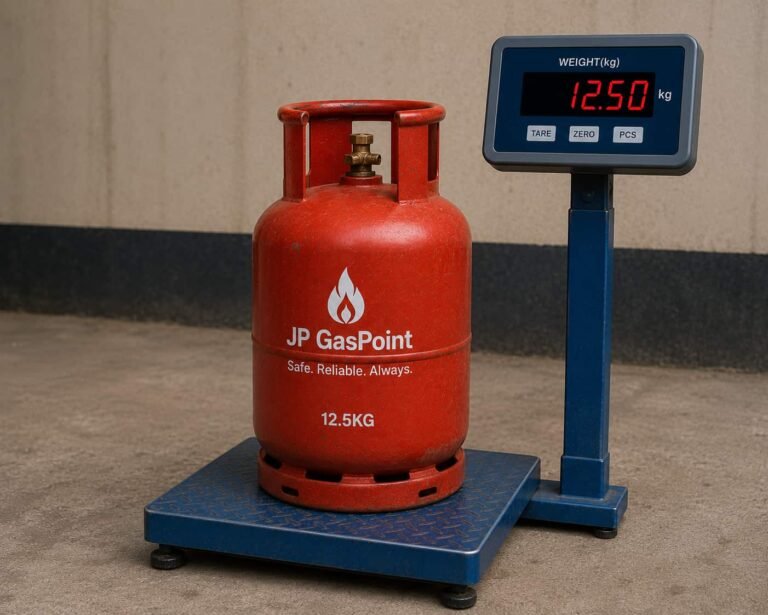
Pay attention to the weight, ask for your cylinder to be weighed properly and keep track of how much gas you normally use. A reliable retailer should be able to explain the quantity you are buying clearly.
Will cooking gas prices keep changing?
Prices can continue to move because the factors behind them can change. Supply, wholesale costs, logistics, demand, exchange rates and local operating costs are not fixed.
The important thing is to understand what you are paying for
Cooking gas prices in Nigeria do not change for just one reason. The final price is influenced by what happens from the point where LPG is supplied to the moment it reaches your cylinder.
So when the price changes, look beyond the number on the signboard. Check the quantity, the retailer’s reliability and the wider market conditions. That gives you a much better basis for deciding whether you are getting fair value.
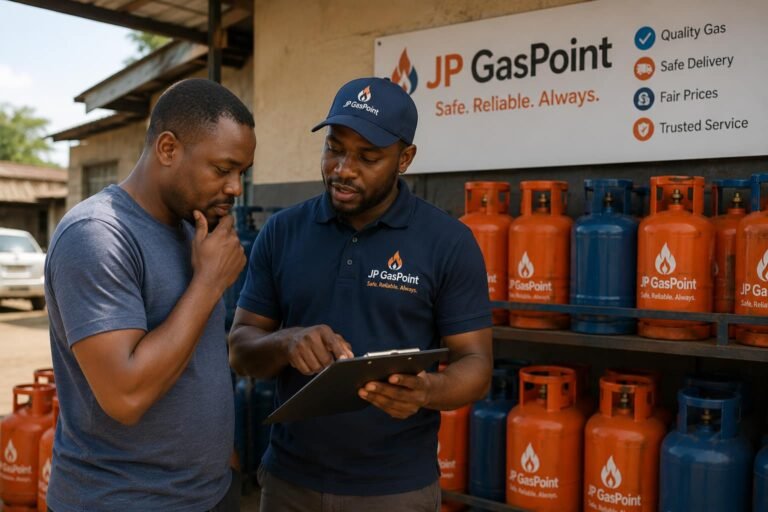
At JP GasPoint, we believe customers should know exactly what they are paying for. We focus on properly weighed refills and safe, reliable service for homes around Bucknor and Community Road, Ago Palace.



One Comment