
How to Tell If You’re Being Overcharged for Cooking Gas
You hand over your money, collect your cylinder, and head home. Most of the time, that is the end of the story. But occasionally something feels off, the refill seems to finish faster than usual, or the price quoted does not quite add up. Knowing how to tell if you are being overcharged for cooking gas puts the power back in your hands.
We weigh gas honestly every day in Lagos, so we know exactly how the maths should work, and where it sometimes gets bent. Here is how to check for yourself.
Always think in price per kilogram
This is the foundation of checking any gas price. A vendor quoting a flat amount to “fill your cylinder” is not giving you a comparable number. Ask directly for the price per kilogram. Once you have that figure, you can compare it against other vendors, and against what you paid last time, in seconds. Our buying guide explains why this habit matters more than any other.
Know your cylinder’s empty weight
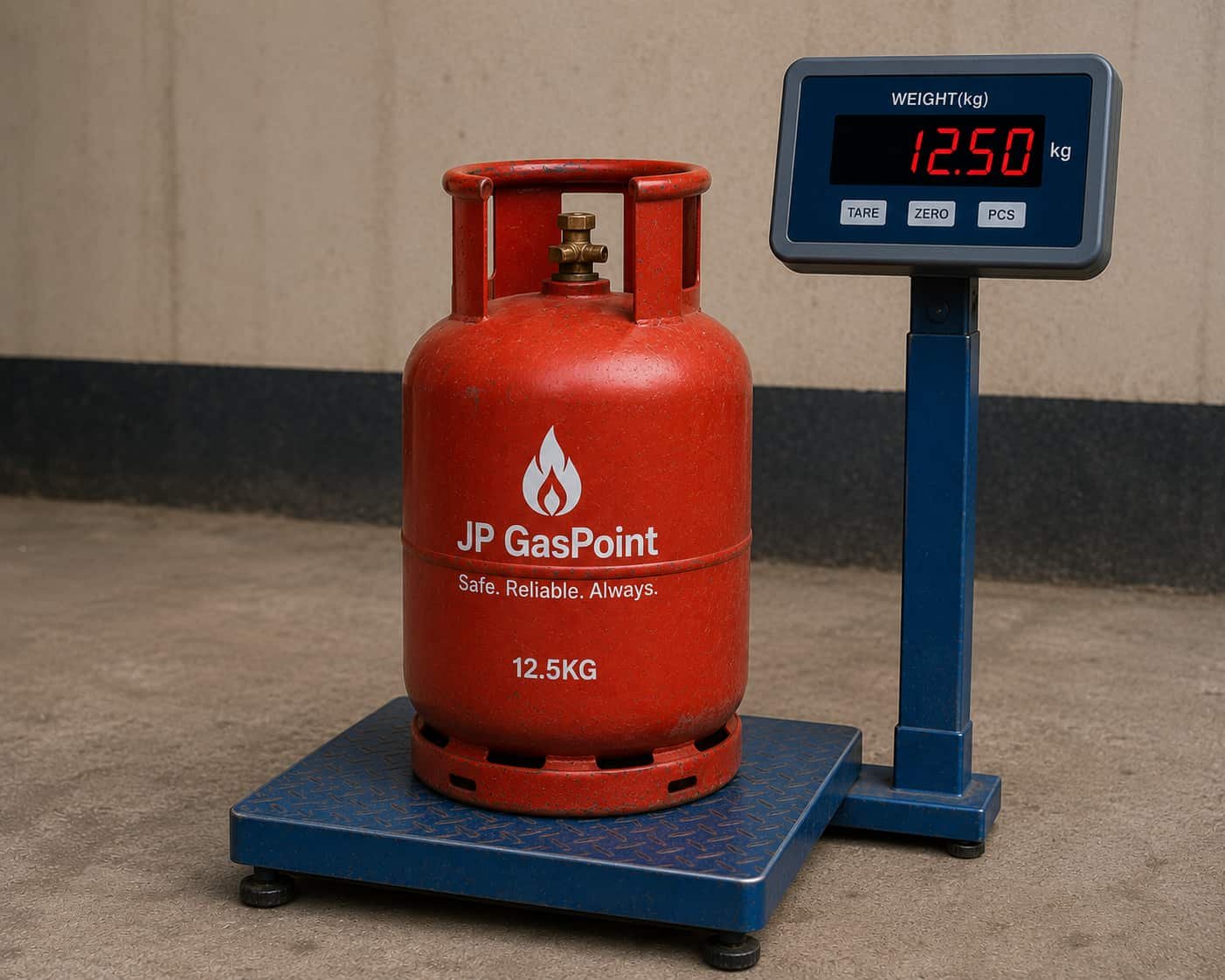
Every cylinder has a tare, or empty weight, stamped on it, usually near the valve. Once you know this number, you can work out exactly how much gas you should be getting. Full weight minus tare weight equals the gas you paid for. Without this number, you are simply trusting the scale reading with no way to check it yourself.
Watch the weighing happen
This is the single most important habit. Ask to see the cylinder weighed before filling, and again after. A reliable vendor has no reason to hide this from you, and will usually show you without hesitation. If a vendor seems reluctant to let you watch, or the scale is angled away from you, that hesitation is itself worth noting.
Track your own numbers over time
Keep a simple note of your refill dates and roughly how long each one lasts. After a few refills, you will know your own normal. If a cylinder suddenly runs out far sooner than usual, that is worth investigating, it can point to a leak, but it can also point to a short refill. Our guide on gas finishing fast helps you tell the two apart.
Compare against nearby vendors
Every so often, check the price per kilogram at a vendor or two near you. Prices do genuinely move with the market, so some difference is normal. But if one vendor sits noticeably above everyone else with no clear reason, that is worth asking about. A good vendor can usually explain their pricing plainly.
Be wary of vague answers
Ask a straightforward question, what is the price per kilogram today, and listen to the answer. A confident, specific number is a good sign. A vague reply, or one that dodges the actual figure, is worth noticing. Honest vendors are usually happy to be transparent, because they have nothing to hide in the maths.
What to do if you think you were overcharged
If your numbers genuinely do not add up, raise it calmly and directly with the vendor. A good one will explain their pricing or make it right. If they cannot, or will not, that is useful information for next time. Our guide to choosing a vendor covers what to look for when you decide where to go instead.
Your quick overcharge check
- Ask for the price per kilogram, not a flat fill price.
- Know your cylinder’s empty weight.
- Watch the cylinder weighed before and after filling.
- Track your refill dates to spot a sudden change.
- Compare prices with nearby vendors now and then.
- Notice vague or evasive answers about pricing.
Frequently asked questions
How do I find my cylinder’s empty weight?
It is usually stamped near the valve, often labelled as the tare weight. If you cannot find it, ask your vendor to weigh the empty cylinder and note it down.
Is it rude to ask a vendor to show me the scale?
Not at all, it is a completely normal and reasonable request. A trustworthy vendor will not mind, and many will show you without being asked.
Do gas prices really vary that much between vendors?
Some variation is normal due to location and costs, but large, unexplained gaps are worth questioning rather than simply accepting.
What if my regular vendor’s price suddenly jumps?
Ask why, plainly. A fair explanation, like a rise in the bulk supply cost, is reasonable. No explanation at all is a sign to compare elsewhere.
Checking whether you are being overcharged is not about suspicion, it is about a few simple habits that protect your money. Know your numbers, watch the scale, and ask plain questions. Most vendors welcome that, and it quickly shows you which ones are worth staying with.
If you are in Lagos, we weigh every order openly and are always glad to explain our pricing. See our services, read our buying guide, or message us on WhatsApp for today’s rate.


2 Comments