How to Read Your Gas Cylinder’s Manufacture and Requalification Date
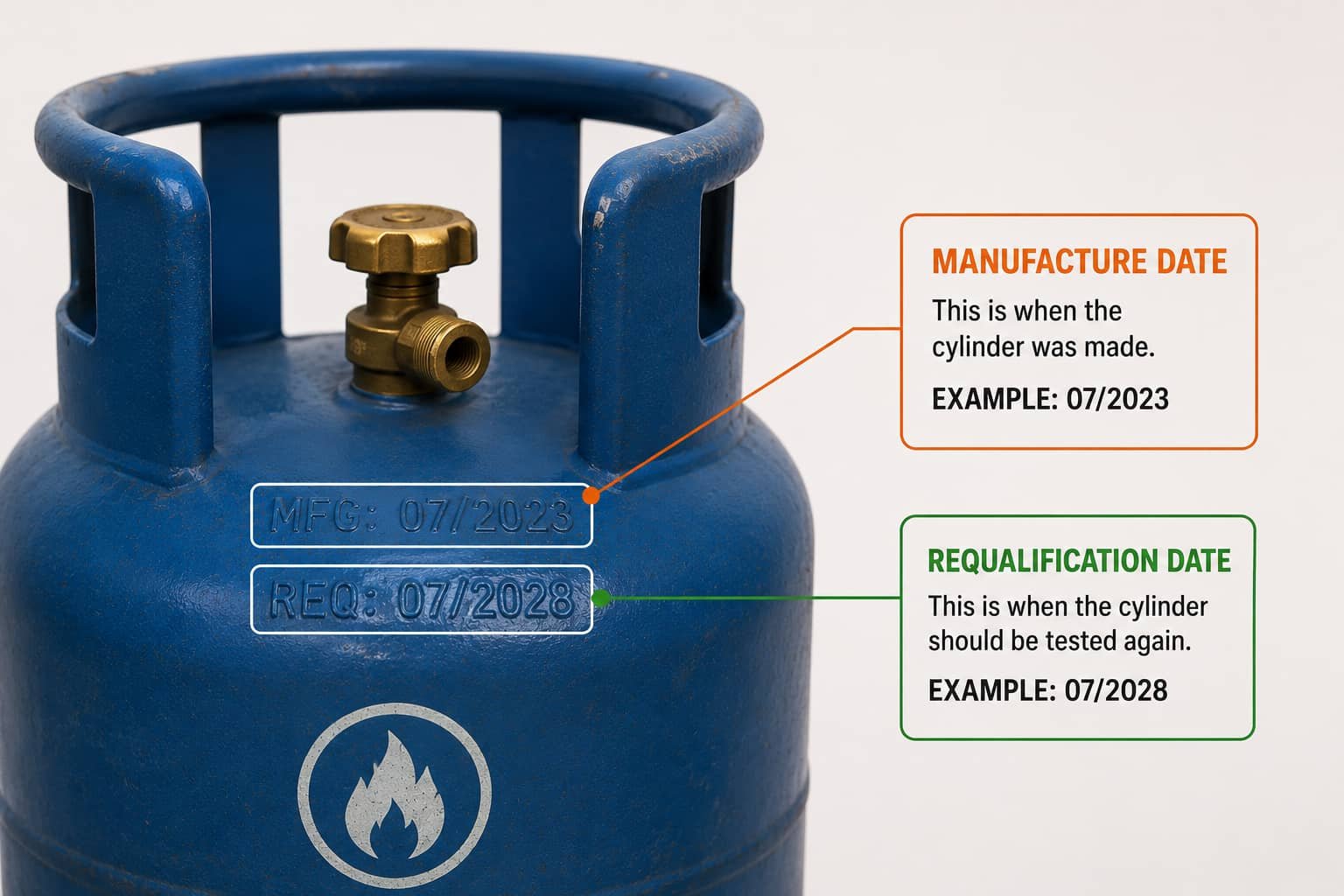
Look closely at the shoulder of your gas cylinder, just below the valve, and you will find a cluster of stamped numbers and letters most people never notice. That stamp is not decoration. It tells you when the cylinder was made, and when it is due for its next safety requalification. Knowing how to read it is a genuinely useful skill.
We check these stamps on cylinders every day in Lagos. Here is how to find the marks and understand what they are telling you.
Why the date matters
A cylinder is not meant to be used indefinitely without a check. Over years, metal fatigues, and a cylinder needs periodic requalification, essentially a safety recheck, to confirm it can still safely hold pressurised gas. The stamped date is how anyone, you, a vendor, an inspector, can tell whether a cylinder is still within its safe service window.
Where to find the markings
Look at the shoulder of the cylinder, the sloped metal area near the top, around or just below the valve. This is where manufacturers stamp their details directly into the metal. You may need to wipe away dust or a little surface rust to read it clearly. A torch held at an angle can help the stamped characters stand out.
What the stamp usually shows
You will typically find several pieces of information stamped close together. A manufacturer’s mark or code identifies who made the cylinder. A manufacture date, often shown as a month and year, tells you its age. A standard or specification code confirms it was made to a recognised standard. And on a cylinder that has been requalified, a fresh stamp or mark is usually added at each inspection, alongside the original manufacture date.
Understanding the requalification cycle
Cylinders are generally due for requalification on a multi-year cycle from their manufacture date, and again at set intervals after that. The exact interval can vary by cylinder type and local standard, so the safest approach is simple: if you cannot clearly identify a recent requalification mark, or the cylinder looks old and unchecked, treat it as due for inspection rather than guessing.
What to do if you cannot read the stamp
Sometimes the marking is worn, painted over, or simply missing. This is not automatically a crisis, but it is worth acting on. Take the cylinder to a reputable gas plant and ask them to check it properly. They can assess its condition and confirm whether it is safe to continue using, or whether it should be exchanged. Do not simply assume an unreadable stamp means it is fine.
This is one part of a bigger check
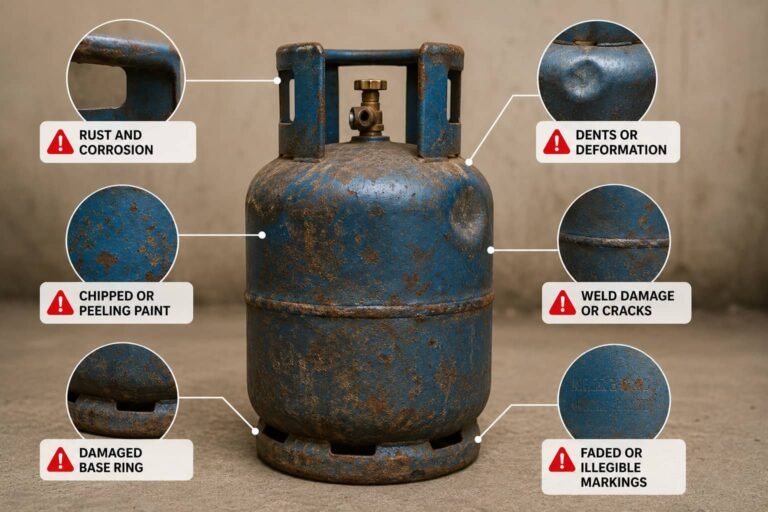
The date stamp is useful, but it is not the only thing worth checking. Rust, dents, a damaged base, and a poorly functioning valve all matter too, regardless of how recent the requalification date is. Our cylinder safety guide and guide to spotting a fake cylinder cover the rest of what to look for.
Make it a habit at exchange time
The easiest moment to check is whenever you exchange or buy a cylinder. Take thirty seconds to glance at the shoulder before accepting it. A reputable vendor will not mind you checking, and it should show a sensible, recent date. This small habit, alongside a soapy water leak test once connected, gives you real confidence in what you are bringing home.
Your quick date-check routine
- Look at the shoulder, near the valve, for stamped marks.
- Wipe away dust or rust so the stamp is legible.
- Identify the manufacture date and any requalification mark.
- If you cannot read it clearly, have a gas plant check it.
- Make checking part of every exchange or purchase.
Frequently asked questions
Where exactly is the date stamped on a gas cylinder?
On the shoulder, the sloped metal section near the top of the cylinder, close to the valve. It is stamped into the metal itself, not printed on a sticker.
How often does a cylinder need requalification?
It is on a multi-year cycle that can vary by cylinder type and standard. If you are unsure whether yours is due, a reputable gas plant can confirm it for you.
Is it dangerous to use a cylinder past its requalification date?
It has not been recently verified as safe, which is a real risk worth avoiding. Have it checked or exchanged rather than continuing to use it as normal.
Can I check the date myself, or do I need a professional?
You can absolutely spot and read the stamp yourself with a clean surface and good light. If it is unclear or you are unsure how to interpret it, ask your vendor or a gas plant.
Reading your cylinder’s date stamp takes thirty seconds and tells you something a glance at the outside never could. Make it a habit at every exchange, and you will always know exactly what you are bringing into your kitchen.
If you are in Lagos, every cylinder we supply is properly checked and within date. See our services, read our cylinder safety guide, or message us on WhatsApp.