
Why Should a Gas Cylinder Stay Upright? What LPG Users Should Know
It can be tempting to lay a cooking gas cylinder on its side. This may happen when you are moving it or making space in a small kitchen. But for normal household LPG use, the cylinder should remain upright.
That is not simply a rule people repeat because it sounds safer. LPG is stored as a liquid under pressure. The appliance normally receives the gas as vapour. Keeping the cylinder upright helps the system work as designed.
Why Does the Cylinder Need to Stay Upright?
Inside a cooking gas cylinder, LPG exists mainly as a liquid with a space above it containing LPG vapour. When the cooker is operating, LPG vapour is drawn from the cylinder through the valve and regulator.
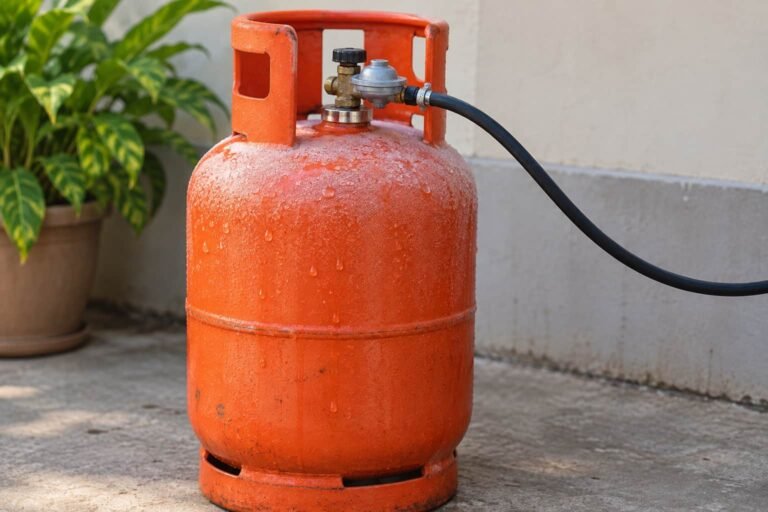
With the cylinder standing normally, the valve is positioned above the liquid level. That helps the regulator and appliance receive LPG vapour rather than liquid LPG.
If a cylinder is placed on its side, the liquid and vapour change position in relation to the valve. Depending on the cylinder and equipment, this can create an unsafe condition. Liquid LPG may reach parts of the system that are designed to handle vapour.
Upright Does Not Mean Simply Standing There
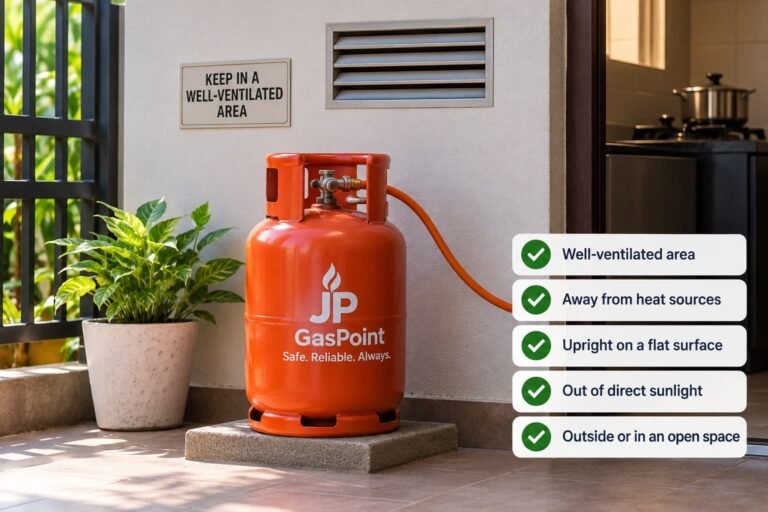
A cylinder can be upright and still be poorly positioned. Place it on a stable surface where it is unlikely to fall or be knocked over. It should also stay clear of normal movement around the kitchen.
For larger or exposed cylinders, securing the cylinder against falling may be appropriate. Safety guidance for LPG cylinders commonly recommends keeping them upright and preventing them from falling or being damaged.
At home, avoid places where children, pets, vehicles or normal household activity could easily knock the cylinder over.
What If Your Cylinder Falls Over?
Do not panic, but do not ignore it either.
If the cylinder has fallen while connected to your cooker, first keep people away from the area. If you can safely shut off the gas supply without putting yourself at risk, do so. Do not continue cooking simply because the cylinder still appears to be working.
Once it is safe, check the cylinder, valve, regulator and hose for obvious damage. Do not put a damaged cylinder or connection back into normal use. Have it checked by a competent LPG professional or your gas supplier.
If you notice a gas smell, hissing sound or visible damage, treat it as a separate safety concern. Do not simply stand the cylinder back up. Our guide on what to do when cooking gas smells explains the immediate steps to take.
What About Moving the Cylinder?
Moving a cylinder from one safe location to another is sometimes necessary. But a household LPG cylinder should not be treated like an ordinary container that can be rolled or carried carelessly.
Keep the cylinder upright and protect the valve and regulator connection from knocks. During transport, secure it so it cannot move around. This helps prevent damage to the cylinder, valve or nearby objects.
If you are moving house, take extra care with the cylinder rather than placing it loose in a vehicle. Our guide on moving house with a gas cylinder covers the wider precautions.
Should You Ever Lay a Cooking Gas Cylinder Flat?
For normal household cooking, do not deliberately lay the cylinder flat while it is connected to the cooker.
Some specialised LPG systems are designed for particular operating positions. That does not make a standard household cooking-gas setup safe to use on its side. Use the cylinder, regulator, hose and appliance in their intended configuration.
This is especially important when someone suggests laying the cylinder down because “there is still gas inside” or because it seems to improve the flame. Changing the cylinder position is not a safe way to solve a weak flame or other cooker problem.
Do Not Use Cylinder Position to Fix a Weak Flame
This is where the temptation usually comes in. When the gas is almost finished and the flame starts getting weak, you may hear someone say, “Just lie the cylinder down small; the gas will flow better.” It may sound reasonable. It is not a safe trick.
A weak flame can have several causes. Check the burner, regulator, hose and gas supply first. Laying the cylinder on its side can change how liquid LPG sits around the valve. It may allow liquid rather than vapour to reach parts designed for vapour. That is why normal household LPG cylinders should remain upright. Check our guide to a weak gas cooker flame instead of changing the cylinder’s position. If the problem continues, have the relevant equipment checked.
A Simple Upright-Cylinder Check
Before using your cooker, take a few seconds to look at the cylinder and its connection.
- Is the cylinder standing upright on a stable surface?
- Is it positioned where it is unlikely to be knocked over?
- Is the valve and regulator connection free from obvious damage?
- Is the hose routed safely without being crushed, sharply bent or exposed to excessive heat?
- Is there any unusual gas smell or hissing sound?
If something looks or smells wrong, stop and investigate the safety issue rather than continuing to cook.
When Should You Stop Using the Cylinder?
Stop using the setup and seek professional advice if the cylinder is visibly damaged. Do the same if the valve or regulator connection is damaged. Also stop if there is a persistent gas smell, unexplained hissing or evidence of a serious impact or fire.
Do not try to repair a damaged cylinder yourself or dismantle its valve. LPG equipment is not something to experiment with when you are unsure about its condition.
Frequently Asked Questions
Can I use my gas cylinder if it is slightly tilted?
A household cooking gas cylinder should be kept upright during normal use. If it has shifted or is leaning on an unstable surface, turn off the appliance. Correct the setup safely before continuing.
Why is LPG cylinder orientation important?
The cylinder contains liquid LPG and vapour. Keeping it upright helps the valve remain in the vapour space. This allows the appliance to receive gas in the form the regulator and cooker are designed to use.
What should I do if my cylinder falls over?
Keep people away, shut off the gas if you can do so safely, and check for obvious damage. If there is a gas smell, hissing or visible damage, do not resume use until the problem has been properly assessed.
Can laying a cylinder down make the gas last longer?
No. Changing the cylinder’s position is not a safe or reliable way to get more gas from it. The amount of LPG in the cylinder does not increase because its position changes.
The Bottom Line
For normal household cooking, keep your LPG cylinder upright, stable and protected from being knocked over. Do not lay it down to solve a flame problem. Do not use that position to try to get the last bit of gas out.
Keeping the cylinder positioned safely is a small habit. It is part of using LPG the way the equipment is designed to be used. If you need a properly weighed cooking gas refill or delivery in Bucknor and Community Road, Ago Palace, JP GasPoint can help.