Where Is the Safest Place to Keep a Gas Cylinder at Home?
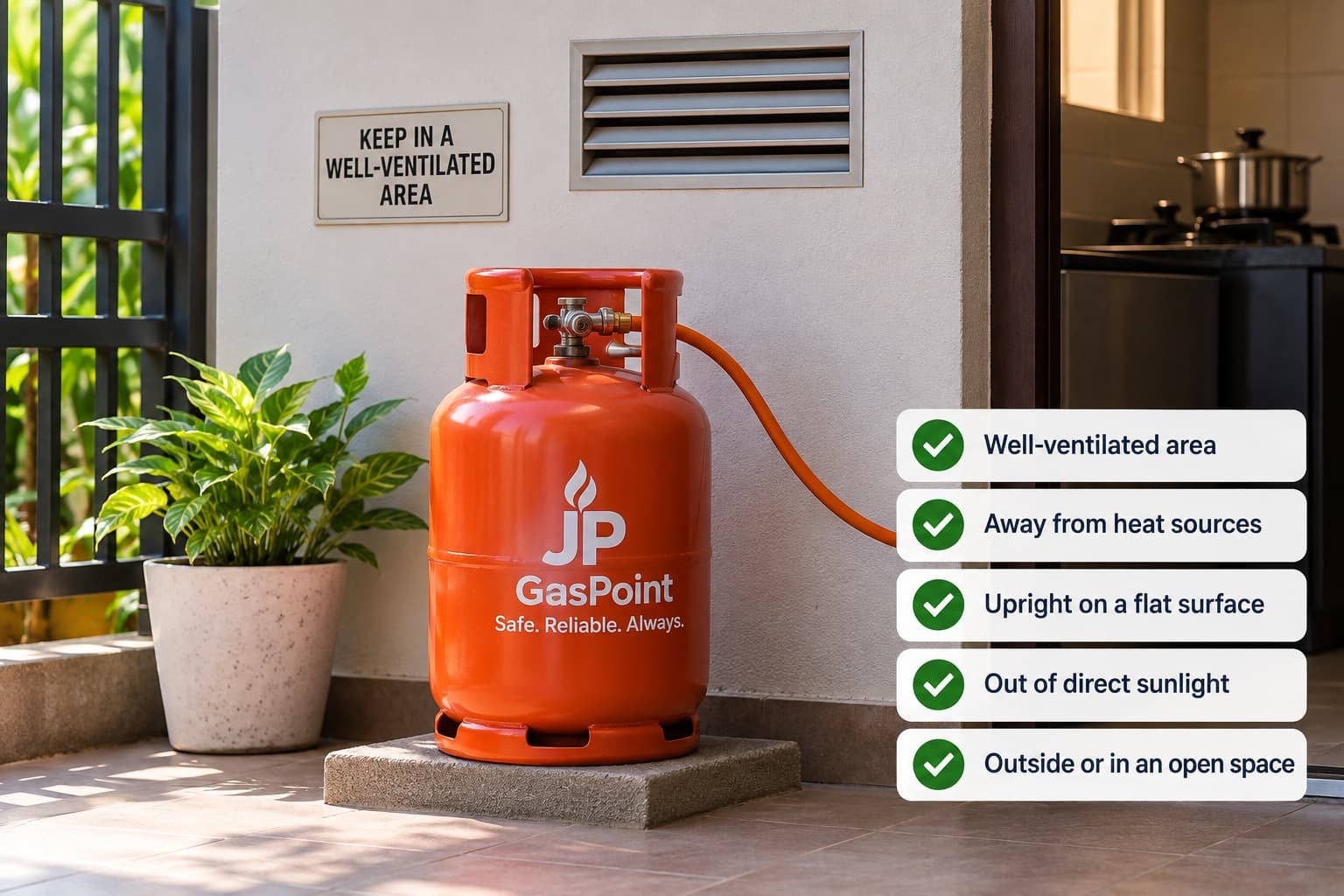
If you have ever wondered about the safest place to keep a gas cylinder at home, start with four things: ventilation, heat, stability and access. A good location should reduce the chance of a leak becoming dangerous and protect the cylinder from damage.
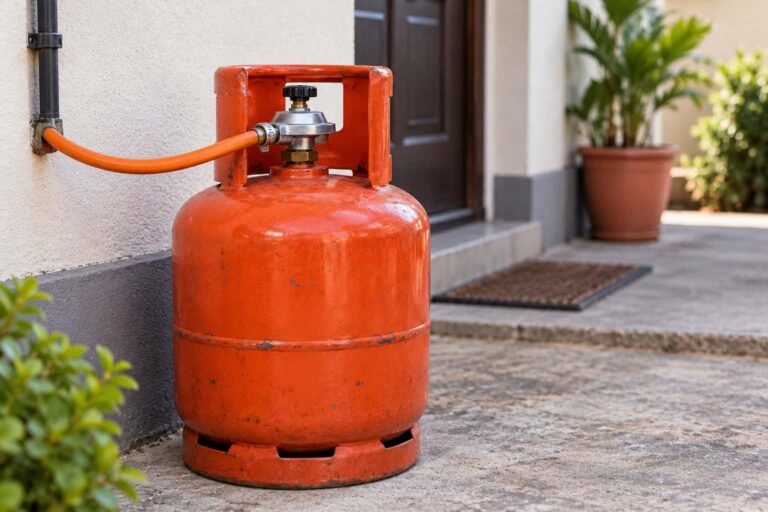
It is not simply about finding an empty corner. Your LPG cylinder should be upright, stable, protected from excessive heat and kept where there is enough ventilation.
Start here: choose safety over convenience
The most convenient place is not always the safest. A spot beside the cooker, under a staircase or inside a closed cabinet may save space, but it can create avoidable risks.
Instead, choose a location where you can easily inspect the cylinder, regulator and hose. It should also be protected from knocks, excessive heat and anything that could damage the valve or connections.
The safest place to keep a gas cylinder at home
For most household setups, the safest location is a well-ventilated area that keeps the cylinder upright and away from heat and ignition sources. The exact arrangement depends on the cylinder, cooker and installation.
An outdoor location can provide good ventilation, but it must still protect the cylinder from damage, excessive heat and other hazards. If you are changing an installation or are unsure about the correct position, get it checked by a qualified gas professional.
Keep the cylinder upright and stable
Keep a household LPG cylinder in its normal upright position on a firm, level surface. Do not leave it leaning against a wall or somewhere it can easily fall.
A stable position also makes inspection easier. Check the cylinder, valve, regulator and hose from time to time. If you notice serious damage, heavy corrosion or a damaged valve, stop using it and contact your gas supplier or a qualified professional.
Ventilation is one of the most important factors
LPG is heavier than air. If gas escapes, it can settle in low areas instead of simply rising away. That is why a confined, poorly ventilated space can make a leak more dangerous.
Avoid storing the cylinder in a sealed cupboard, enclosed box or other space where leaked gas could collect. Good ventilation around the cylinder and its connections is important.
Keep it away from excessive heat and flames
Do not position the cylinder directly beside a cooker, burner, open flame or another source of excessive heat. Strong sunlight and other heat sources should also be considered when choosing a location.
The hose needs attention too. Keep it away from hot parts of the cooker and places where it can be crushed, pulled or damaged. A damaged hose can become a serious safety problem.
What about keeping the cylinder inside the kitchen?
There is no single answer for every kitchen. What matters is whether the cylinder is in a safe, properly ventilated arrangement and away from heat and ignition sources.
Do not put a cylinder inside a closed cabinet simply to make the kitchen look neater. If you are unsure about ventilation, clearances or the way the cylinder is connected, ask a qualified professional to inspect the setup.
If you are also moving or transporting a cylinder, see our guide on how to store and transport your gas cylinder safely.
Places you should avoid
- Inside a sealed cupboard, cabinet or storage box.
- Directly beside a cooker, burner or other ignition source.
- Where the cylinder can be knocked over or struck by vehicles or heavy objects.
- In a damp or corrosive location where the cylinder can deteriorate.
- Where the regulator or hose can be pulled, crushed or damaged.
- In a low, enclosed area where leaking LPG could collect.
A simple safety check before you cook
Before lighting the cooker, take a quick look at the cylinder and its connections. Make sure the cylinder is upright. Check that the regulator and hose appear properly connected. Look for obvious damage or an unusual smell of gas.
If you smell gas, do not light a flame or operate electrical switches near the suspected leak. Turn off the gas supply if it is safe to do so, move away from the area and seek appropriate help. Never use a flame to test for a leak.
For more guidance, read our article on why your gas may smell and what to do.
When you should get professional help
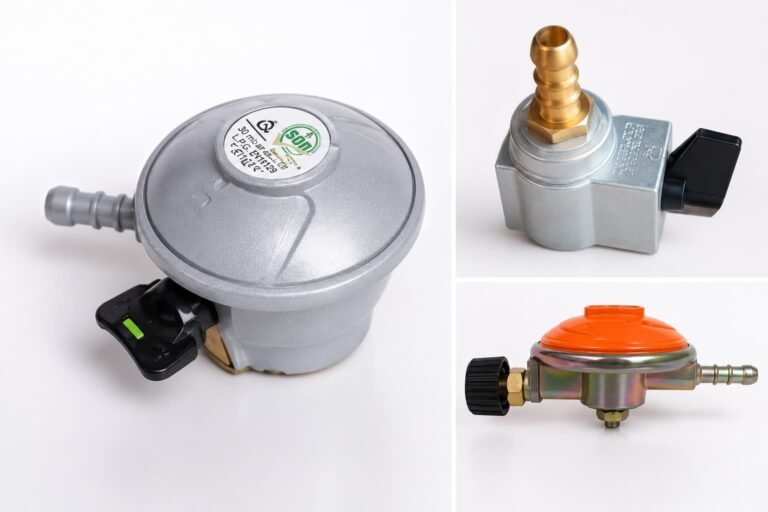
Get qualified help if you are unsure about the cylinder location, regulator compatibility, hose routing or ventilation. Do not improvise with fittings or modify the setup just to make it fit a particular space.
You should also get help if you notice a persistent gas smell, damaged equipment, unusual hissing or a cylinder that appears badly corroded or unstable.
FAQs
Can I keep my gas cylinder inside a cupboard?
A sealed cupboard is not a good place for an LPG cylinder because leaked gas can accumulate. Use a properly ventilated arrangement and follow the requirements for your particular installation.
Should a gas cylinder be kept upright?
Yes. A household LPG cylinder should normally be kept upright and stable unless a specific cylinder design and installation requires another position.
Can I keep a cylinder outside?
An outdoor location can provide good ventilation, but it still needs protection from damage, excessive heat and other hazards. The exact setup should suit the cylinder and installation requirements.
What should I do if I smell gas near the cylinder?
Do not create a flame or spark. If it is safe, shut off the gas supply, move away from the area and get appropriate professional or emergency assistance. Never use a match or lighter to find a leak.
The safest location is the one that reduces risk
There is no benefit in choosing a cylinder location simply because it saves space. Keep your LPG cylinder upright, stable, well ventilated and away from excessive heat, flames and anything that could damage it.
If you are setting up a new cylinder or changing your cooking arrangement, it is better to get the setup checked than to guess.
At JP GasPoint, we believe good gas service goes beyond supplying LPG. It also means helping customers understand how to use and store it safely at home.


2 Comments