
How to Store and Transport Your Gas Cylinder Safely
Where you keep your gas cylinder, and how you move it, matters just as much as how you cook with it. Gas is perfectly safe when it is handled well. But most cylinder scares come down to a few avoidable storage and transport mistakes. Here is how to store a gas cylinder safely, move it without worry, and spot trouble early.
None of this is complicated. It is mostly common sense, plus a couple of things people do not think about. We handle cylinders every day in Lagos, so this is the same advice we give our own customers.
Why storage and transport matter
Gas is heavier than air. So if it ever leaks, it sinks and settles low. In an open, airy space, it simply disperses. In a closed or hot space, it can build up unnoticed. That single fact explains almost every storage rule that follows. Give any escaping gas somewhere to go, and you remove most of the risk.
How to store a gas cylinder at home
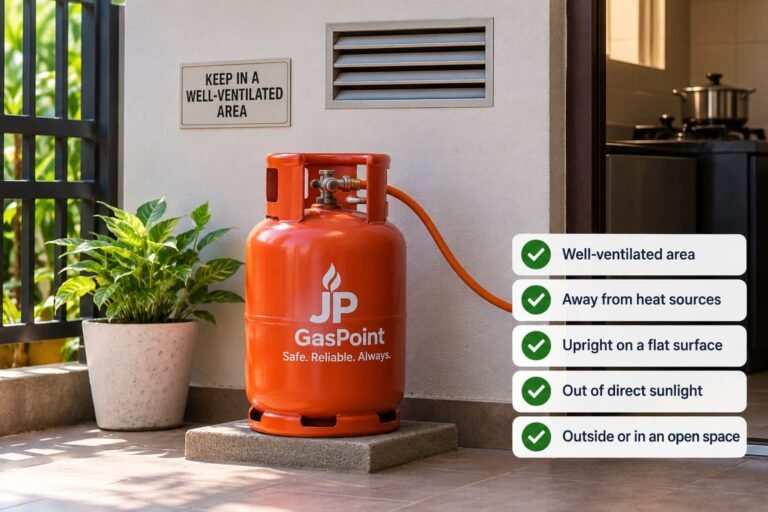
Keep the cylinder upright at all times, on a firm, level surface. Choose a well-ventilated spot, never a sealed cupboard. Keep it away from heat, open flames, and electrical sockets or switches. Avoid the bedroom, and avoid a tight space under the stairs with no airflow. A ventilated corner of the kitchen, or just outside with the hose run in, is far safer than a closed box where a leak could gather.
Keep it cool and out of the sun
Heat is the other thing to respect. Warmth raises the pressure inside the cylinder. In normal conditions that is no problem, since cylinders are built for it. But direct sun for hours, or a spot right beside the cooker, is best avoided. Keep your cylinder shaded, cool, and ventilated, and pressure stays where it should.
Is it safe to keep a gas cylinder in a hot car?
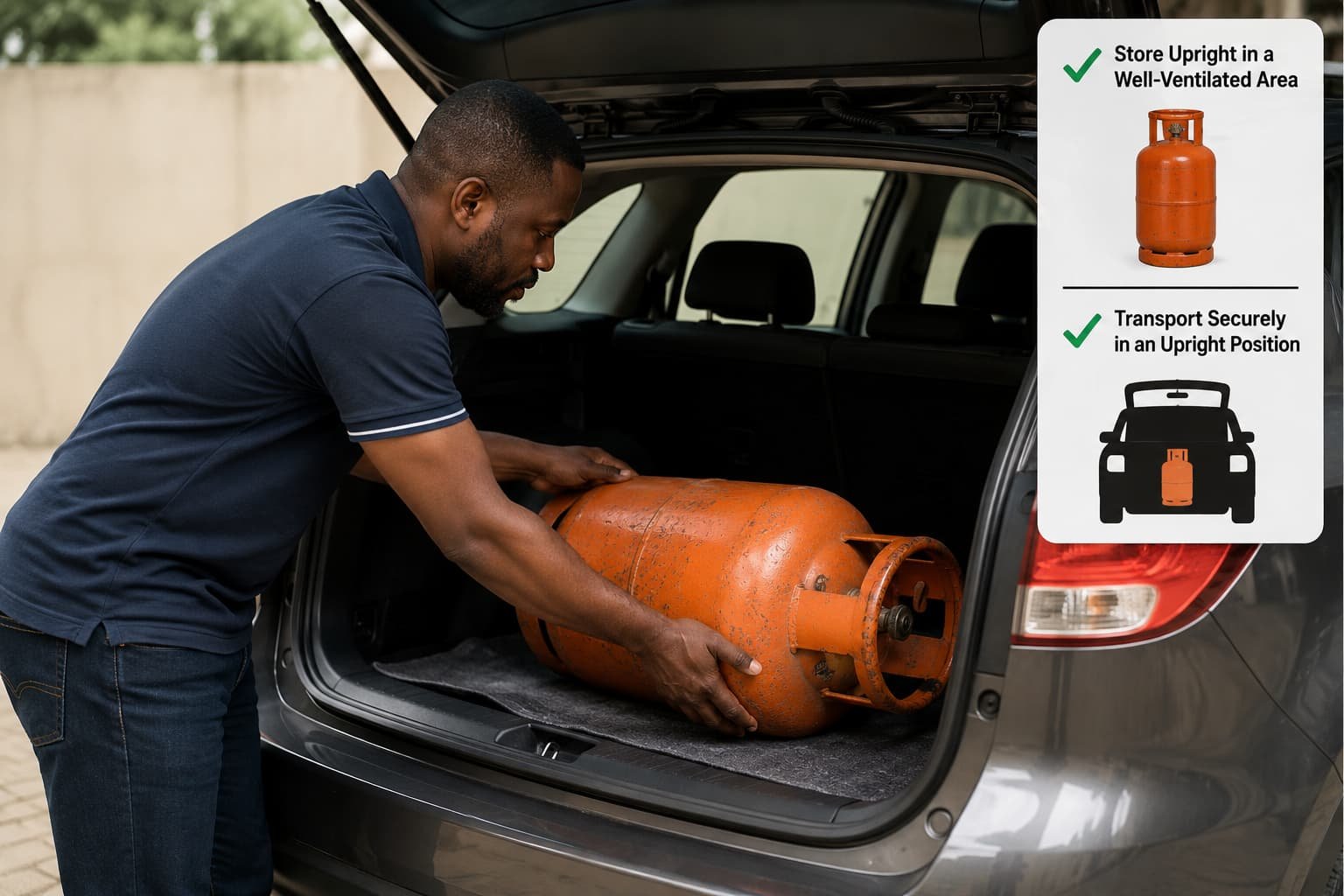
This is a question we hear often, and the answer is simple. A parked car in the sun gets extremely hot inside, much hotter than the air outside. Leaving a cylinder in that heat for hours is not a good idea, because the heat drives up the pressure. It is fine to transport a cylinder in your car. Just do not leave it sitting in a hot, closed vehicle all day. Move it, then take it out promptly.
How to transport a cylinder safely
Moving a cylinder is easy when you do it right. Keep it upright and secure it so it cannot roll or tip. Make sure the valve is fully closed before you set off. Crack a window for a little airflow, and go straight to your destination. Then unload it promptly, rather than leaving it in the boot. Handle it gently, since dropping a cylinder can damage the valve.
Check the cylinder’s condition
A cylinder in poor shape is a risk wherever you keep it. Look it over now and then for heavy rust, deep dents, or a damaged base. These weaken the metal over time. A cylinder that is badly worn should be checked or swapped, not patched. Our equipment guide covers what a good cylinder should look like.
After moving it, run a quick leak check
Whenever you have moved or reconnected a cylinder, take a moment to check it. Brush a little soapy water over the valve and regulator joint, and watch for bubbles. Bubbles mean gas is escaping, so fix the connection before you cook. It takes a minute, and it catches the most common problems. Our safety guide walks through the full test.
Your storage and transport checklist
- Store the cylinder upright, on a firm, level surface.
- Keep it ventilated, and away from heat and switches.
- Never store it in a sealed cupboard or a bedroom.
- Do not leave a cylinder in a hot, closed car for hours.
- Transport it upright, secured, with the valve closed.
- Run a soapy water leak check after moving it.
Frequently asked questions
Is it safe to store a gas cylinder in the kitchen?
Yes, as long as it is upright, ventilated, and away from the direct heat of the cooker. A sealed cupboard is the thing to avoid.
Can a gas cylinder explode in the heat?
Cylinders are built to handle normal warmth. The real caution is extreme, prolonged heat, like a closed car in the sun. Keep it cool and shaded, and you are fine.
How should I move a full cylinder?
Keep it upright and secure, with the valve closed. Take it straight home, then unload it promptly instead of leaving it in the car.
Can I keep a spare cylinder indoors?
You can, if it is stored upright in a ventilated spot, away from heat. With the valve closed, a spare is fine. Just never tuck it into a sealed cupboard.
Storing and moving a cylinder safely comes down to a few simple habits. Keep it upright, cool, and ventilated. Move it carefully, and never leave it baking in a hot car. Do that, and your cylinder stays exactly as safe as it should be.
If you are in Lagos and would rather we handled the heavy lifting, we deliver and connect cylinders properly. Read our cooking gas safety guide for more, see our services, or message us on WhatsApp.

One Comment