
Cooking Gas Safety in Nigeria: A Complete Home Guide
Cooking gas is one of the cleanest and most convenient ways to cook, and when it is handled properly, it is also very safe. Almost every gas accident you hear about traces back to the same short list of avoidable mistakes: a worn hose, a cylinder kept in the wrong place, or a leak that nobody noticed in time. Get those few things right and you remove most of the risk.
This guide covers what every Nigerian household needs to know about cooking gas safety, from choosing and checking your equipment to spotting a leak early and knowing exactly what to do if something goes wrong. We run a gas business in Lagos and handle cylinders every day, so this is the same practical advice we give our own customers.
First, the good news
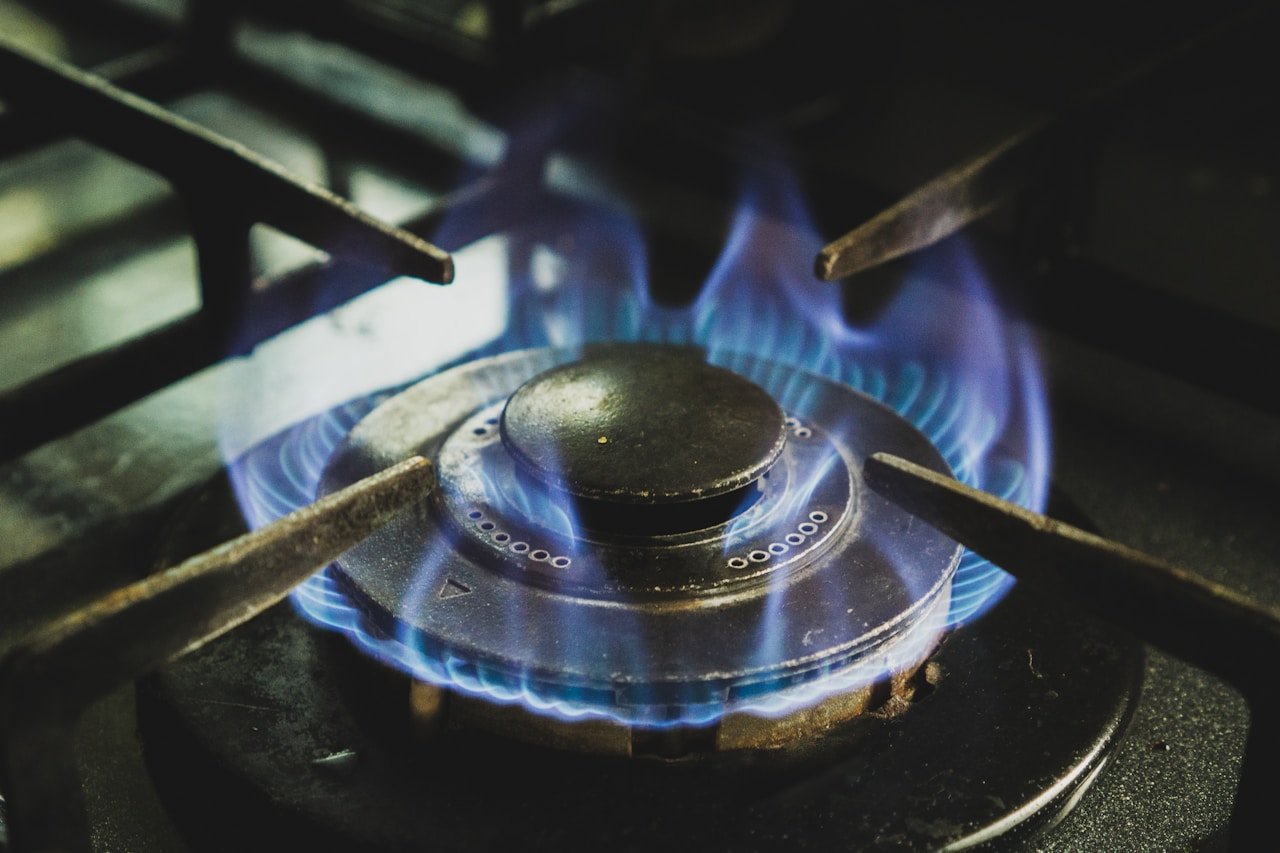
The gas in your cylinder (LPG) is safe by design. It is stored under pressure, it burns clean, and suppliers deliberately add a strong, sharp smell so that any leak is easy to notice. The gas itself is not the danger. The danger is carelessness, faulty parts, and poor ventilation, and all three are within your control.
So the goal here is not to make you nervous about your kitchen. It is to give you a small set of habits that, once they become routine, keep you and your family safe without a second thought.
Choose and check your equipment
Most leaks do not start at the cylinder. They start at the cheap, ageing parts between the cylinder and your burner. Three things deserve your attention.
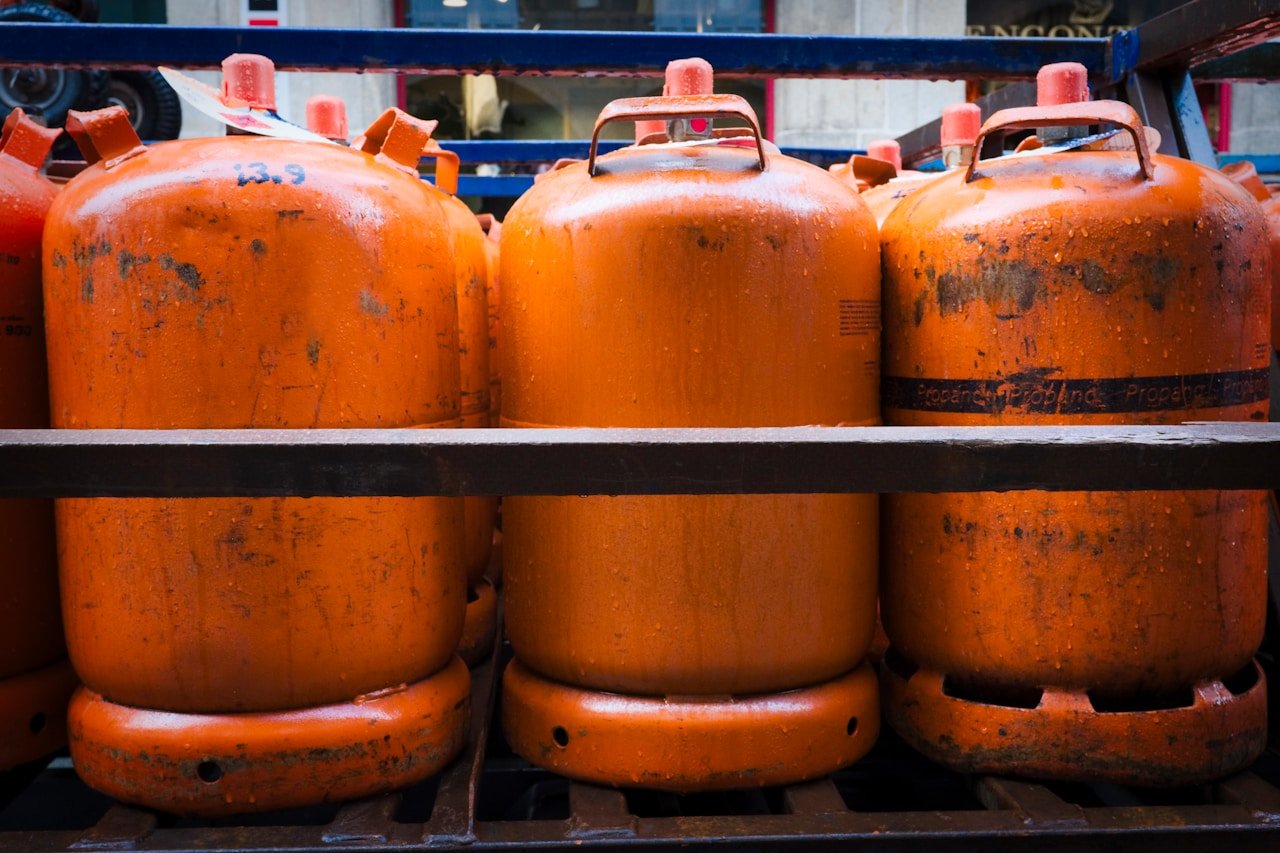
The cylinder. Buy from a trusted source and look it over. Heavy rust, deep dents, or a damaged base weakens the metal over time. A cylinder in poor condition should be checked or swapped, not patched.
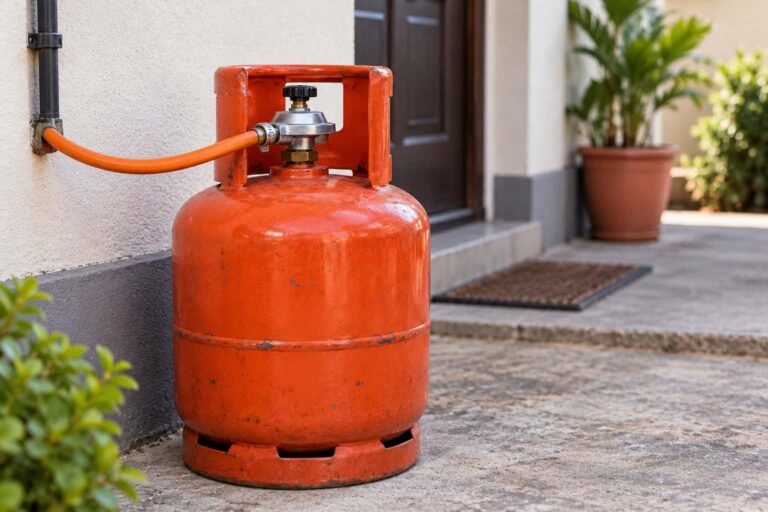
The hose. This is the part people ignore for years, and it is the one that fails most. A good gas hose should be firm, not cracked, sticky, or soft. Replace it roughly every one to two years, and sooner if you see any cracking. Secure both ends with proper clips.
The regulator. It should sit firmly on the cylinder valve with no hissing. A loose or worn regulator is a common, quiet source of leaks. If it does not seat properly, replace it rather than forcing it.
Where to keep your cylinder
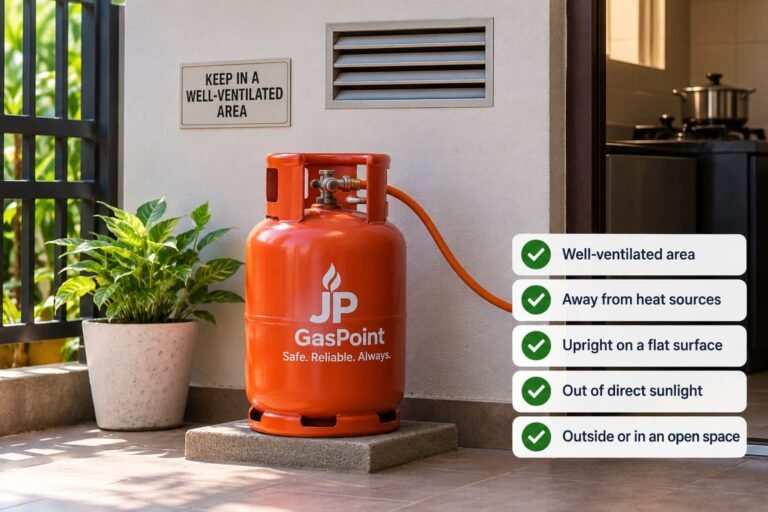
Where you store your cylinder matters as much as the cylinder itself. Gas is heavier than air, so if it leaks, it settles low and pools in enclosed spaces. The aim is always to give any escaping gas somewhere to disperse.
Keep your cylinder upright, on a firm, level surface, in a well-ventilated spot. Keep it away from heat, open flames, and electrical sockets or switches. Avoid storing it in a sealed cupboard, a bedroom, or a tight space under the stairs with no airflow. A ventilated corner of the kitchen, or just outside with the hose run in, is far safer than a closed box where a leak can build up unnoticed.
How to spot a gas leak early
Catching a leak early is the single most useful safety skill you can have. Watch for these signs:
- Smell. That sharp, rotten-egg odour is added on purpose. Any persistent gas smell means gas is escaping somewhere.
- Sound. A faint hissing near the regulator or valve points to gas escaping under pressure.
- The soapy water test. Brush a little soapy water over the valve, regulator, and hose connections. If bubbles form, gas is leaking at that joint.
- Your gas running out faster than usual. If a refill is finishing far quicker than normal, a slow leak is a likely cause.
The soapy water test is worth doing every time you change or refill a cylinder. It takes a minute and catches the most common leaks before they become a problem.
What to do if you smell gas
If you notice a strong gas smell, stay calm and act in this order. The key principle is simple: do nothing that could create a spark.
- Do not light a match or lighter, and do not touch any electrical switch, including turning lights or fans on or off. A small spark is all it takes.
- Put out any open flame that is already burning.
- If you can reach it safely, turn off the cylinder valve.
- Open all doors and windows so the gas can escape and the air can clear.
- Get everyone out of the space, and avoid using your phone inside the room.
- Do not go back in until the smell is completely gone. If it persists, leave the cylinder off and call your gas vendor or a qualified technician.
Everyday safe-cooking habits
Most days, safety comes down to small routines. Turn the gas off at the cylinder valve when you finish cooking for the day, not just at the burner knob. Never leave cooking food unattended for long. Keep curtains, nylon, and dish cloths well away from the flame.
When lighting your burner, strike your match or lighter first, then turn on the gas, so it does not collect before it ignites. Keep young children away from the cooker, and before bed, take a second to notice whether the kitchen smells normal. These take seconds and become second nature quickly.
Refilling your cylinder safely
Refilling is where quality and honesty matter. Use a vendor you trust, and one who gives you the full weight you pay for. After any refill, do the soapy water test on the valve before you start cooking, and make sure the regulator seats properly.
When transporting a cylinder, keep it upright and secured, and never leave it sitting in a hot car for hours. A reputable gas business will handle all of this carefully and weigh your cylinder honestly, which is exactly the standard we hold ourselves to at JP GasPoint.
A few myths worth clearing up
“A little gas smell is normal.” It is not. A brief whiff as you light up is one thing, but a smell that lingers always means gas is escaping.
“An old cylinder is fine as long as it still holds gas.” Rust and dents weaken the metal even when the cylinder is not leaking yet. Condition matters, not just whether it works today.
“Keeping the cylinder in a closed cupboard is tidy and safe.” Tidy, yes. Safe, only if it is ventilated. An enclosed space is exactly where a leak can quietly build up.
When to call a professional
Some things should not be improvised. Call a qualified technician for a new installation, for a leak that continues after you have checked the obvious joints, or for any problem with the valve or regulator that you cannot resolve simply. Gas fittings are not the place for guesswork, and a professional check is cheap next to the alternative.
Your quick cooking gas safety checklist
- Inspect your hose regularly and replace it before it cracks.
- Keep the cylinder upright, ventilated, and away from heat and switches.
- Do the soapy water test after every refill or cylinder change.
- Turn off at the cylinder when you are done for the day.
- If you smell gas: no flames, no switches, ventilate, and get out.
Cooking gas safety is not complicated. It is a handful of habits done consistently, plus good equipment and an honest refill. Do those and gas remains what it should be: a clean, convenient, everyday part of your kitchen.
If you are in Lagos and want your gas handled properly from the start, with safe handling, honest weight, and delivery to your door, that is exactly what we do. See our services, browse more guides in our Gas Safety section, or message us any time on WhatsApp.

One Comment