
What to Do After Refilling Your Gas Cylinder Before Cooking
Getting your gas cylinder refilled is usually routine, but what you do next matters. Before reconnecting it and starting to cook, take a few minutes to check the cylinder, valve, regulator and hose. A refill means the cylinder is ready to supply gas again, but it does not mean you should skip the basic checks around the cylinder and its connection.
Whether you have just returned from a refill point or had a cylinder delivered to your home, this is a good time to slow down and make sure everything is in proper condition. Look over the cylinder, check the valve and rubber seal, inspect the regulator and hose, and make sure the connection is secure before you light the cooker. These few minutes can help you catch a damaged component or possible leak before it becomes a bigger problem.
Start here: do not rush straight to cooking
When you bring a refilled cylinder home, keep it upright, stable and in a well-ventilated place. Handle it carefully and keep it away from flames, excessive heat and anything that could cause ignition.
Check the cylinder before connecting anything
Give the cylinder a quick visual inspection. Look for serious corrosion, significant dents, damage around the valve or any other condition that looks unsafe. Also check that the valve and protective fittings appear to be in good condition.
If the cylinder is damaged or you notice something unusual, do not connect it simply because it has already been refilled. Have it checked by the supplier or a competent gas professional.
Check the valve and rubber seal
The valve deserves particular attention after a refill. Nigerian LPG safety guidance recommends checking that the O-ring rubber seal inside the cylinder valve is intact before and after refilling.
If the seal is missing, badly damaged or not properly seated, do not improvise with tape, extra rubber or another makeshift material. Have the component checked or replaced properly.
Inspect the regulator and hose
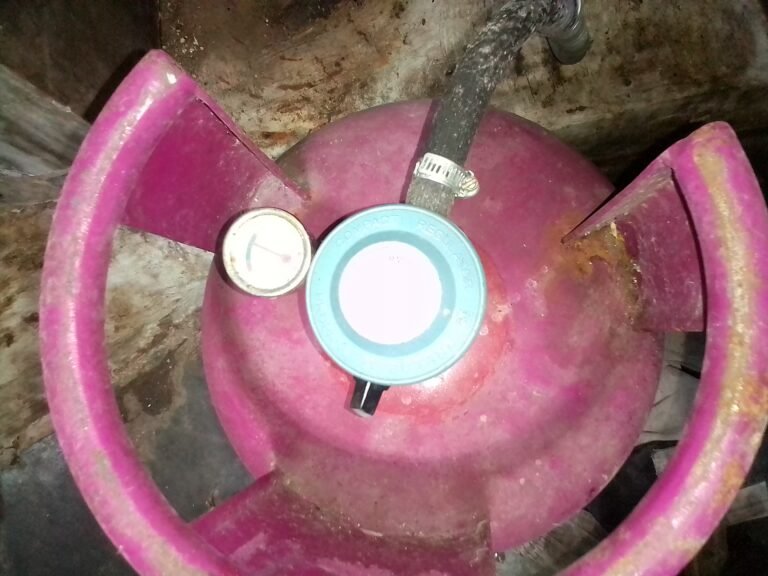
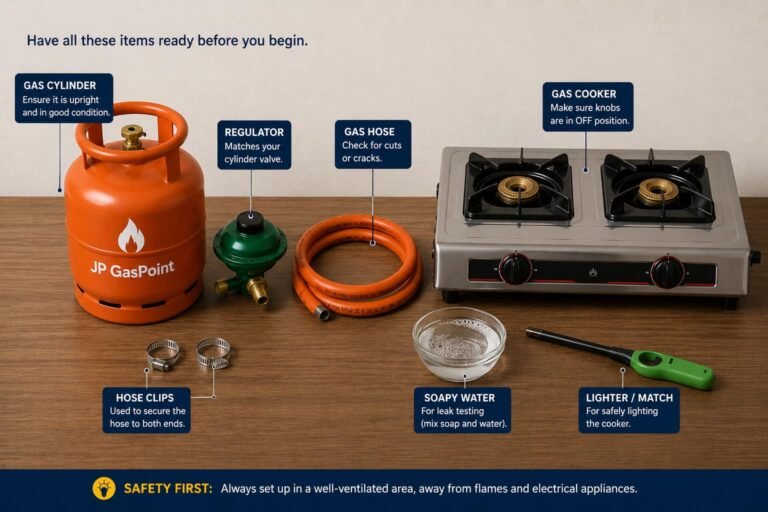
Before reconnecting the cylinder, inspect the regulator and hose. The regulator should be suitable for the cylinder and appliance, while the hose should be free from obvious cracks, cuts, severe hardening and loose connections.
If you are unsure whether your regulator is compatible, do not force the connection. Our guide on how to choose the right gas regulator for your cylinder explains what to look for.
Connect the cylinder only when everything looks right
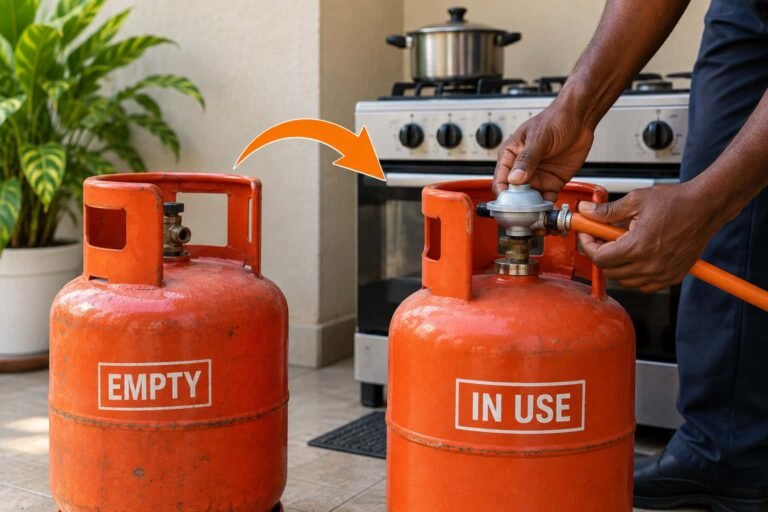
Make sure the cooker knobs are off and there is no flame or other ignition source nearby. Connect the regulator according to the type of connection it uses. It should fit and lock correctly without excessive force, improvised fittings or makeshift repairs.
If you want a step-by-step refresher, see how to safely connect a gas cylinder to your cooker.
Do a leak check before you cook
This is one of the most important checks after reconnecting a refilled cylinder. Never use a match, lighter or any naked flame to look for a leak. For accessible connections, an appropriate soapy-water solution can help you spot a leak: bubbles forming repeatedly at a connection can indicate escaping gas.
If you find a possible leak, do not light the cooker. If it is safe to do so, turn off the gas supply, keep flames and ignition sources away, and have the connection checked. If you smell gas and cannot safely control the situation, move away and contact the supplier or appropriate emergency service.
Make sure the cylinder is positioned safely
Once your checks are complete, keep the cylinder upright and stable in a properly ventilated location. Avoid cabinets and enclosed spaces, and keep the cylinder away from excessive heat, flames and combustible materials.
If you are unsure about its location, our guide to the safest place to keep a gas cylinder at home covers the practical considerations.
What if something does not look right?
A gas smell, hissing sound, damaged hose, leaking valve or unusual regulator behaviour is a reason to stop. Do not assume the problem will disappear once you light the cooker.
If you smell gas, avoid flames, sparks and anything that could ignite it. If it is safe to do so, shut off the gas supply and ventilate the area without creating sparks. For more guidance, see why your gas may smell and what to do.
Frequently asked questions
Should I check my gas cylinder after every refill?
Yes. A quick check of the cylinder, valve, seal, regulator, hose and connections is a sensible habit after every refill.
Can I test a gas leak with a lighter?
No. Never use a naked flame to find an LPG leak. Use an appropriate soapy-water test on accessible connections or get professional help.
What should I do if my refilled cylinder smells of gas?
Do not light the cooker. Keep ignition sources away and, if safe, shut off the gas supply and ventilate the area. If you cannot safely control the leak, move away and contact the supplier or appropriate emergency service.
Can I connect the cylinder immediately after bringing it home?
Yes, provided it has been handled safely and the cylinder, valve, seal, regulator and hose are in good condition and compatible. There is no benefit in rushing the checks.
Before you light the cooker
A freshly refilled cylinder should not simply be connected and forgotten. Take a minute to inspect the cylinder and valve, check the seal, regulator and hose, make sure the connection is secure, and confirm there is no sign of a leak.
At JP GasPoint, we believe refilling should come with confidence as well as convenience. If you need a gas refill or help choosing the right cylinder, regulator or accessories, we are here to help.


One Comment