Why Does My Gas Cylinder Get Cold or Frosty During Use?
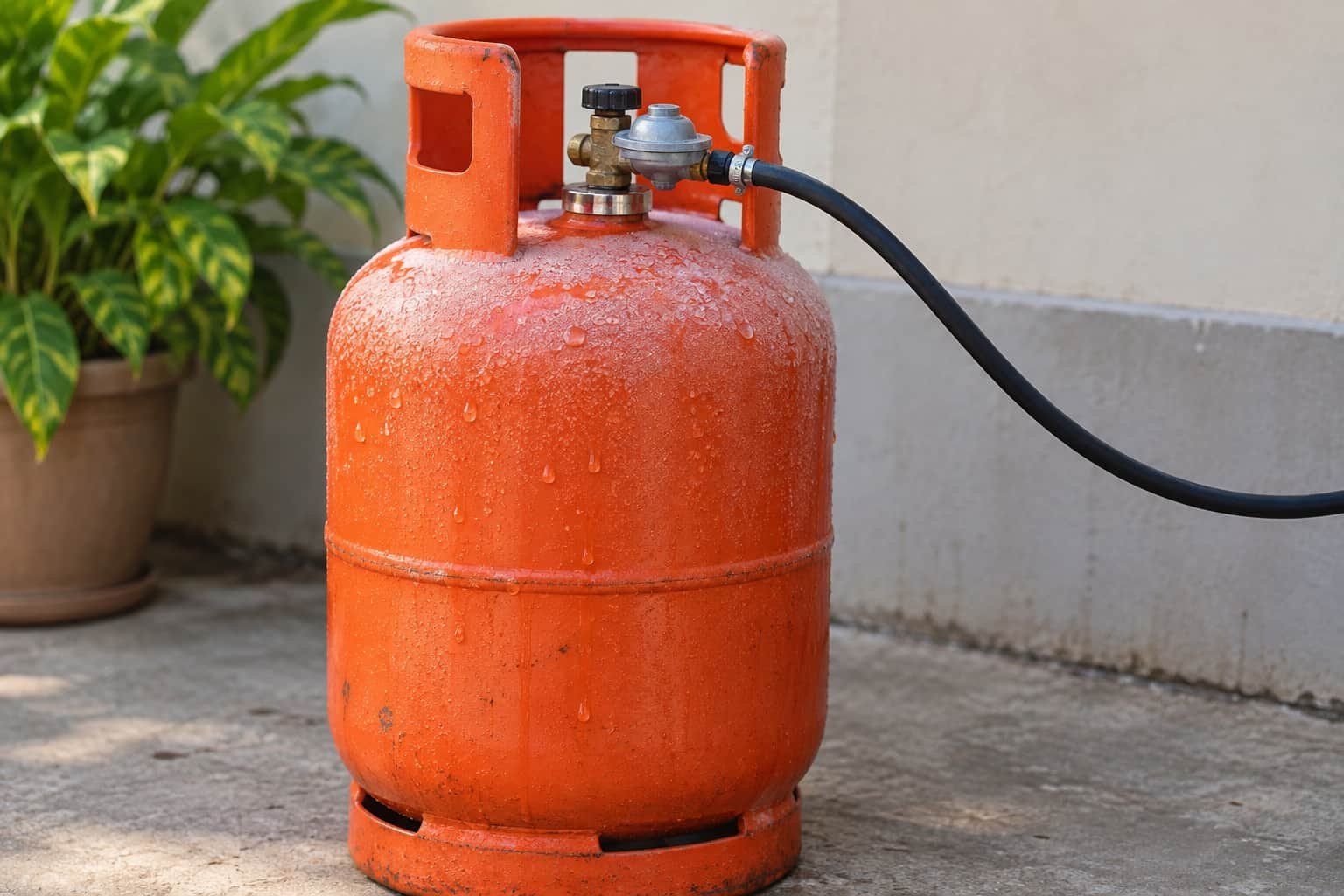
Have you ever noticed that your LPG cylinder feels unusually cold while you are cooking? In some cases, you may even see condensation or a light layer of frost on part of the cylinder.
This can be surprising, but the cold surface does not automatically mean the cylinder is damaged. LPG is stored as a liquid under pressure, and changes in the liquid as gas is drawn off can cool the cylinder. Still, heavy icing or other unusual signs should not be ignored.
Why Does an LPG Cylinder Become Cold?
LPG is stored inside the cylinder mainly as a liquid. When you use the cooker, some of that liquid changes into gas to replace the gas leaving the cylinder.
This change requires heat. As heat is taken from the surroundings and the cylinder, the cylinder surface can become cold.
That is why a cylinder may feel colder during periods of heavy gas use. Condensation can also appear on the outside when the cold cylinder cools the moisture in the surrounding air.
Is a Cold Gas Cylinder Dangerous?
A cold cylinder by itself does not necessarily mean there is a leak or that the cylinder is about to fail. The important thing is to look at what else is happening.
If the cylinder is simply cool while the cooker is operating normally, there may be no immediate problem. However, significant icing, an unusual gas smell, damaged equipment or an abnormal flame deserves attention.
LPG is highly flammable, and liquid LPG escaping from a container can become very cold and cause cold burns on skin. For that reason, do not deliberately touch, handle or interfere with a suspected leak.
What Does Frost on the Cylinder Mean?
Light condensation is different from heavy frost or ice.
If a small area becomes cool or damp while the cooker is being used, it can be related to normal cooling. Heavy or rapidly developing ice may indicate that the cylinder is being asked to supply gas at a high rate or that the system needs professional attention.
Do not pour hot water over an LPG cylinder to remove ice. Do not heat it with a stove, fire, heater or other heat source. If substantial icing develops, stop using the appliance and get advice from a competent LPG professional or your supplier.
Can a Cold Cylinder Cause a Weak Flame?
It can be one factor when gas demand is high and the cylinder cannot vaporise LPG quickly enough to maintain the required supply. A weak flame can also have many other causes, including a dirty burner, regulator problem or restricted gas flow.
If your flame has become weak, do not assume that the cold cylinder is the only cause. Our guide on why your gas cooker flame may be weak covers the basic checks.
What Should You Do If Your Cylinder Is Icing?
First, turn off the cooker if you can do so safely. Do not try to speed up the warming process with an external heat source.
Next, look for other warning signs. Pay attention to a gas smell, hissing, damaged hose or regulator, unusual flame behaviour or visible signs of a leak.
If you suspect a leak, avoid flames, smoking and anything that could create an ignition source. Do not use a lighter or match to test the cylinder.
If the cylinder or connection continues to behave unusually after the appliance is switched off, contact your LPG supplier or a qualified professional for advice.
Keep the Cylinder Upright and Properly Positioned
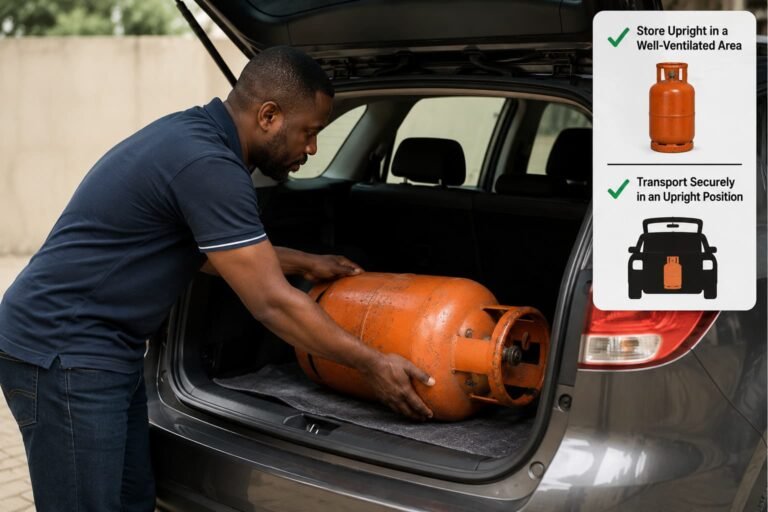
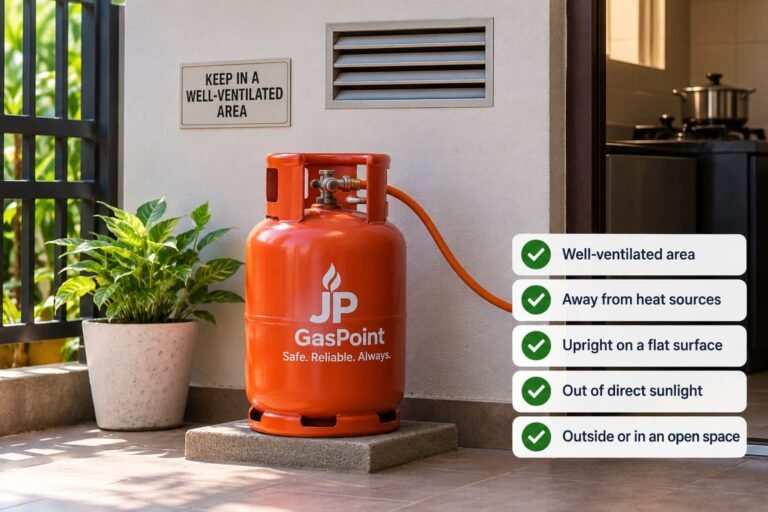
An LPG cylinder should be kept upright unless it is specifically designed and installed for another position. It should also be secure, well ventilated and protected from conditions that could damage the cylinder, valve, hose or regulator.
Do not place the cylinder close to a direct heat source or try to change its position while the system is in use. If you are unsure whether your installation is suitable, ask a competent LPG professional to inspect it.
You can also read our guide on where to keep a gas cylinder safely at home.
When Should You Stop Using the Cylinder?
Stop using the appliance and seek professional advice if you notice heavy or persistent icing, a gas smell, a suspected leak, damaged connections or other unusual behaviour.
Do not attempt to repair a leaking cylinder, regulator or hose yourself. Gas equipment should be handled by people with the appropriate knowledge and competence.
Frequently Asked Questions
Is it normal for an LPG cylinder to feel cold?
A cylinder can become cold during use because LPG is vaporising inside it. A cool surface alone does not necessarily indicate a fault.
Why is there water on the outside of my gas cylinder?
Condensation can form when the cylinder becomes colder than the surrounding air. However, heavy moisture combined with icing or other unusual signs should be investigated.
Can I pour hot water on a frozen gas cylinder?
No. Do not use hot water, flames, heaters or other external heat sources to warm an LPG cylinder. Stop using the appliance and seek professional advice if significant icing develops.
Can cylinder icing mean there is a gas leak?
Not necessarily. Icing can be related to gas withdrawal and cooling, but a leak is a separate safety concern. If you smell gas or see other signs of a leak, stop using the appliance and follow gas-leak safety procedures.
The Bottom Line
A cold LPG cylinder is not automatically a dangerous LPG cylinder. Cooling can happen as gas is drawn from the liquid inside the cylinder.
The important distinction is between normal cooling and unusual icing or other warning signs. Never use external heat to warm the cylinder, and get professional advice if you notice heavy icing, a gas smell, a suspected leak or damaged equipment.
If you need a properly weighed LPG refill or delivery in Bucknor and Community Road, Ago Palace, JP GasPoint can help.